Yuvabhim Education And Cheritable Trust Ranavav-2
History Of Dr. Ambedkar
English & Hindi
B. R. Ambedkar
| Dr.Bhimrao Ramji Ambedkar |
|---|

Ambedkar delivering a speech to a rally at Yeola, Nashik, on 13 October 1935
|
| Died | 6 December 1956 (aged 65)
Delhi, India |
|---|
| Other names | Baba, Baba Saheb, Bhima, Mooknayak |
|---|
| Spouse(s) | Ramabai Ambedkar (m. 1906) [1] Savita Ambedkar (m. 1948) [2] |
|---|
| Signature | 
|
|---|
Dr. Bhimrao Ramji Ambedkar ([bʱiːmraːw raːmdʑiː aːmbeːɽkər]; 14 April 1891 – 6 December 1956), popularly also known as Babasaheb, was an Indian jurist, political leader, philosopher, anthropologist, historian, orator,
economist, teacher, editor, prolific writer, revolutionary and a
revivalist for Buddhism in India. He was also the chief architect of the
Indian Constitution. In 2012 he was chosen greatest Indian in a
nationwide poll held by History TV and CNN-IBN.[3][4]
Born into a poor Mahar (considered an Untouchable caste) family, Ambedkar campaigned against social discrimination, the system of Chaturvarna – the categorisation of Hindu society into four varnas – and the Hindu caste system. He converted to Buddhism and is also credited with providing a spark for the transformation of hundreds of thousands of Dalits or untouchables to Theravada Buddhism. Ambedkar was posthumously awarded the Bharat Ratna, India's highest civilian award, in 1990.[5]
Overcoming numerous social and financial obstacles, Ambedkar became one of the first Dalit
(untouchables) to obtain a college education in India. Eventually
earning a law degree and doctorates for his study and research in law,
economics and political science from Columbia University and the London School of Economics,
Ambedkar gained a reputation as a scholar and practised law for a few
years, later campaigning by publishing journals advocating political
rights and social freedom for India's untouchables.
He is regarded as a Bodhisattva by some Indian Buddhists, though he never claimed himself to be a Bodhisattva.[6]
Ambedkar said at a public function in 1956, while he was converting,
that, "accepting Buddhism does not only mean getting into new religion
it means entering into new form of life where everybody has
responsibility to cultivate wisdom, compassion and morality in this life
moments, buddha`s dhamma is here to guide and protect humanity, what we
have to do is to strive for creating a moral order"[7]
Early life and education
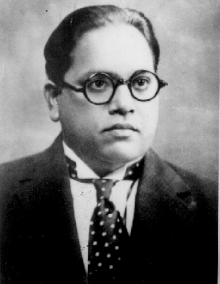
Dr. Bhimrao Ramji Ambedkar seen as a young man[8]
Ambedkar was born in the town and military cantonment of Mhow in the Central Provinces (now in Madhya Pradesh).[9] He was the 14th and last child of Ramji Maloji Sakpal and Bhimabai.[10] His family was of Marathi background from the town of Ambavade (Mandangad taluka) in the Ratnagiri district of modern-day Maharashtra. They belonged to the Mahar caste, who were treated as untouchables and subjected to socio-economic discrimination.[11] Ambedkar's ancestors had for long been in the employment of the army of the British East India Company, and, his father served in the Indian Army at the Mhow cantonment. Having had little formal education in Marathi and English, but encouraging his children to learn and work hard at school.[citation needed]
Belonging to the Kabir Panth,
Ramji Sakpal encouraged his children to read the Hindu classics. He
used his position in the army to lobby for his children to study at the
government school, as they faced resistance owing to their caste.
Although able to attend school, Ambedkar and other untouchable children
were segregated and given little attention or assistance by the
teachers. They were not allowed to sit inside the class. Even if they
needed to drink water somebody from a higher caste would have to pour
that water from a height as they were not allowed to touch either the
water or the vessel that contained it. This task was usually performed
for the young Ambedkar by the school peon, and if the peon was not available then he had to go without water, Ambedkar states this situation as "No peon, No Water".[12] He was required to sit on a gunny sack which he had to take home with him.[13] Ramji Sakpal retired in 1894 and the family moved to Satara
two years later. Shortly after their move, Ambedkar's mother died. The
children were cared for by their paternal aunt, and lived in difficult
circumstances. Three sons – Balaram, Anandrao and Bhimrao – and two
daughters – Manjula and Tulasa – of the Ambedkars would go on to survive
them. Of his brothers and sisters, only Ambedkar succeeded in passing
his examinations and graduating to a high school. Bhimrao Sakpal Ambavadekar the surname comes from his native village 'Ambavade' in Ratnagiri District.[14]
His Brahmin teacher, Mahadev Ambedkar, who was fond of him, changed his
surname from 'Ambavadekar' to his own surname 'Ambedkar' in school
records.[14]
B.A.(Bombay University) Bachelor of Arts, MA.(Columbia university)
Master of Arts, M.Sc.( London School of Economics) Master of Science,
PhD (Columbia University) Doctor of philosophy , D.Sc.( London School of
Economics) Doctor of Science , L.L.D.(Columbia University) Doctor of
Laws , D.Litt.( Osmania University) Doctor of Literature,
Barrister-at-Law (Gray's Inn, London) law qualification for a lawyer in
royal court of England.
Higher education
In 1897, Ambedkar's family moved to Bombay
where Ambedkar became the only untouchable enrolled at Elphinstone High
School. In 1906, his marriage to a nine-year old girl, Ramabai, was
arranged.[1]
In 1907, he passed his matriculation examination and in the following year he entered Elphinstone College, which was affiliated to the University of Bombay,
becoming the first from his untouchable community to do so. This
success provoked celebrations in his community and after a public
ceremony he was presented with a biography of the Buddha by Dada
Keluskar, the author and a family friend.[1]
By 1912, he obtained his degree in economics and political science
from Bombay University, and prepared to take up employment with the
Baroda state government. His wife, by then 19 years old gave birth to
his first son, Yashwant, in the same year. Ambedkar had just moved his
young family and started work, when he dashed back to Mumbai to see his
ailing father, who died on 2 February 1913.[15]
In 1913, he moved to the United States. He had been awarded a Baroda
State Scholarship of £11.50 (Sterling) per month for three years under a
scheme established by the Gaekwar of Baroda that was designed to provide opportunities for postgraduate education at Columbia University. Soon after arriving there he settled in rooms at Livingston Hall
with Naval Bhathena, a Parsi who was to be a lifelong friend. He passed
his MA exam in June 1915, majoring in Economics, with Sociology,
History, Philosophy and Anthropology as other subjects of study; he
presented a thesis, Ancient Indian Commerce. In 1916 he offered another MA thesis, National Dividend of India-A Historic and Analytical Study. On 9 May, he read his paper Castes in India: Their Mechanism, Genesis and Development before a seminar conducted by the anthropologist Alexander Goldenweiser. In October 1916 he studied for the Bar examination at Gray's Inn,
and enrolled at the London School of Economics where he started work on
a doctoral thesis. In June 1917 he was obliged to go back to India as
the term of his scholarship from Baroda ended, however he was given
permission to return and submit his thesis within four years. He
travelled separately from his collection of books, which were lost when
the ship on which they were despatched was torpedoed and sunk by a
German submarine.[15]
Opposition to untouchability
As Ambedkar was educated by the Princely State of Baroda,
he was bound to serve that State. He was appointed as Military
Secretary to the Gaekwar but had to quit within a short time. He
described the incident in his autobiography, Waiting for a Visa.[12]
Thereafter he tried to find ways to make a living for his growing
family. He worked as a private tutor, as an accountant, and established
an investment consulting business, but it failed when his clients
learned that he was an untouchable.[16] In 1918 he became Professor of Political Economy in the Sydenham College of Commerce and Economics
in Bombay. Even though he was successful with the students, other
professors objected to his sharing the same drinking-water jug that they
all used.[17]
Ambedkar had been invited to testify before the Southborough Committee, which was preparing the Government of India Act 1919. At this hearing, Ambedkar argued for creating separate electorates and reservations for untouchables and other religious communities.[citation needed] In 1920, he began the publication of the weekly Mooknayak (Leader of the Silent) in Mumbai with the help of Chatrapati Shahu Maharaj I (1884–1922), Maharaja of Kolhapur.[18]
Ambedkar went on to work as a legal professional. In 1926 he
successfully defended three non-Brahmin leaders who had accused the
Brahmin community of ruining India and were then subsequently sued for
libel. Dhananjay Keer notes that "The victory was resounding, both socially and individually, for the clients and the Doctor".[19]
Protests
While practising law in the Bombay High Court, he tried to uplift the
untouchables in order to educate them. His first organised attempt to
achieve this was the Bahishkrit Hitakarini Sabha, which was intended to promote education and socio-economic improvement, as well as the welfare of "outcastes", at the time referred to as depressed classes.[20]
By 1927 Ambedkar decided to launch active movements against
untouchability. He began with public movements and marches to open up
and share public drinking water resources, also he began a struggle for
the right to enter Hindu temples. He led a satyagraha in Mahad to fight for the right of the untouchable community to draw water from the main water tank of the town.[21]
He took part in an event in which an ancient Vedic[citation needed] text, Manusmṛti, was burned by G. N. Sahasrabuddhe, a Brahmin.[22]
He was appointed to the Bombay Presidency Committee to work with the all-European Simon Commission in 1925.[23]
This commission had sparked great protests across India, and while its
report was ignored by most Indians, Ambedkar himself wrote a separate
set of recommendations for future constitutional recommendations.[24]
Poona Pact
Due to Ambedkar's prominence and popular support amongst the
untouchable community, he was invited to attend the Second Round Table
Conference in London in 1932.[25]
Gandhi fiercely opposed a separate electorate for untouchables, saying
he feared that such an arrangement would split the Hindu community into
two groups.[25]
In 1932, when the British had agreed with Ambedkar and announced a Communal Award of a separate electorate, Gandhi protested by fasting while imprisoned in the Yerwada Central Jail of Poona. The fast provoked huge civil unrest across India and orthodox Hindu leaders, Congress politicians and activists such as Madan Mohan Malaviya and Palwankar Baloo
organised joint meetings with Ambedkar and his supporters at Yerwada.
Fearing a communal reprisal and genocidal acts against untouchables,
Ambedkar was coerced into agreeing with Gandhi.[26] This agreement, which saw Gandhi end his fast and Ambedkar drop his demand for a separate electorate, was called the Poona Pact.
Instead, a certain number of seats were reserved specifically for
untouchables (who in the agreement were called the "Depressed Class").[27]
Political career
In 1935, Ambedkar was appointed principal of the Government Law College, Mumbai,
a position he held for two years. Settling in Mumbai, Ambedkar oversaw
the construction of a house, and stocked his personal library with more
than 50,000 books.[28] His wife Ramabai died after a long illness in the same year. It had been her long-standing wish to go on a pilgrimage to Pandharpur,
but Ambedkar had refused to let her go, telling her that he would
create a new Pandharpur for her instead of Hinduism's Pandharpur which
treated them as untouchables. Speaking at the Yeola Conversion
Conference on 13 October in Nasik, Ambedkar announced his intention to
convert to a different religion and exhorted his followers to leave Hinduism.[28] He would repeat his message at numerous public meetings across India.
In 1936, Ambedkar founded the Independent Labour Party, which contested in the 1937 Bombay election to the Central Legislative Assembly for the 13 reserved and 4 general seats and securing 11 and 3 seats respectively.[29]
On his report to the Viceroy about Bombay Presidency election, the Governor of Bombay, Lord Brabourne said that:
Dr. Ambedkar's boast of winning, not only the 15
seats which are reserved for the Harijans, but also a good many more
looks like completely falsified, as I feared it would be.
Ambedkar published his book The Annihilation of Caste in the same year. This strongly criticised Hindu orthodox religious leaders and the caste system in general.[31] Ambedkar served on the Defence Advisory Committee[32] and the Viceroy's Executive Council as minister for labour.[32]
In his work Who Were the Shudras?,
Ambedkar attempted to explain the formation of Untouchables. He saw the
Shudras, who form the lowest caste in the ritual hierarchy of the Hindu
caste system, as being separate from Untouchables. Ambedkar oversaw the
transformation of his political party into the Scheduled Castes Federation, although it performed poorly in the elections held in 1946 for the Constituent Assembly of India. In his 1948 sequel to Who Were the Shudras?, which he titled The Untouchables: A Thesis on the Origins of Untouchability, Ambedkar said that:
The Hindu Civilisation ... is a diabolical
contrivance to suppress and enslave humanity. Its proper name would be
infamy. What else can be said of a civilisation which has produced a
mass of people ... who are treated as an entity beyond human intercourse
and whose mere touch is enough to cause pollution?[2]
Ambedkar was also critical of Islam and its practices in South Asia. While justifying the Partition of India, he condemned the practice of child marriage, as well as the mistreatment of women, in Muslim society.
No words can adequately express the great and many evils of polygamy
and concubinage, and especially as a source of misery to a Muslim woman.
Take the caste system. Everybody infers that Islam must be free from
slavery and caste. [...] [While slavery existed], much of its support
was derived from Islam and Islamic countries. While the prescriptions by
the Prophet regarding the just and humane treatment of slaves contained
in the Koran are praiseworthy, there is nothing whatever in Islam that
lends support to the abolition of this curse. But if slavery has gone,
caste among Musalmans [Muslims] has remained.[33]
Role in drafting India's Constitution
Upon India's independence on 15 August 1947, the new Congress-led
government invited Ambedkar to serve as the nation's first law minister,
which he accepted. On 29 August, Ambedkar was appointed Chairman of the
Constitution Drafting Committee, charged by the Assembly to write
India's new Constitution.[34]
Granville Austin has described the Indian Constitution
drafted by Ambedkar as 'first and foremost a social document'. ... 'The
majority of India's constitutional provisions are either directly
arrived at furthering the aim of social revolution or attempt to foster
this revolution by establishing conditions necessary for its
achievement.'[35]
The text prepared by Ambedkar provided constitutional guarantees and protections for a wide range of civil liberties
for individual citizens, including freedom of religion, the abolition
of untouchability and the outlawing of all forms of discrimination.[36]
Ambedkar argued for extensive economic and social rights for women, and
also won the Assembly's support for introducing a system of reservations of jobs in the civil services, schools and colleges for members of scheduled castes and scheduled tribes, a system akin to affirmative action.[37]
India's lawmakers hoped to eradicate the socio-economic inequalities
and lack of opportunities for India's depressed classes through these
measures. The Constitution was adopted on 26 November 1949 by the
Constituent Assembly.
Ambedkar resigned from the cabinet in 1951 following the stalling in
parliament of his draft of the Hindu Code Bill, which sought to expound
gender equality in the laws of inheritance and marriage.[38] Ambedkar independently contested an election in 1952 to the lower house of parliament, the Lok Sabha, but was defeated.[39] He was appointed to the upper house, of parliament, the Rajya Sabha in March 1952 and would remain as member till death.[40]
Role in the formation of Reserve Bank of India
Ambedkar was an economist by training and until 1921 his career was
as a professional economist. It was after that time that he became a
political leader. He wrote three scholarly books on economics:
Administration and Finance of the East India Company,
The Evolution of Provincial Finance in British India, and
The Problem of the Rupee: Its Origin and Its Solution[41][42][43]
The Reserve Bank of India (RBI), formed in 1934, was based on the ideas that Ambedkar presented to the Hilton Young Commission.[41][43][44][45]
Amartya Sen, a Nobel Prize-winning economist, claims that
Ambedkar is my Father in Economics. He is true
celebrated champion of the underprivileged.He deserves more than what he
has achieved today. However he was highly controversial figure in his
home country,though it was not the reality. His contribution in the
field of economics is marvelous and will be remembered forever..![46]
Second marriage
After the completion of the drafting of India's constitution,
Ambedkar went to Bombay for treatment. There he met Dr. Sharada Kabir, a
Saraswat Brahmin, whom he married on 18 April 1947, at his home in New Delhi.[47] She adopted the name Savita and took care of him for the rest of his life.[2]
Returning to Buddhism
Ambedkar discovered from his research on ancient India and anthropology
that the Mahar people were an ancient Buddhist community of India who
had been forced to live outside villages as outcasts because they
refused to renounce their Buddhist practices.[citation needed] He considered this to be why they became untouchables[citation needed] and he wrote a book on this topic, entitled Who were the Shudras?.

Dikshabhumi, a stupa at the site in Nagpur, where Ambedkar embraced Buddhism along with many of his followers
Ambedkar studied Buddhism all his life, and around 1950s, Ambedkar
turned his attention fully to Buddhism and travelled to Sri Lanka (then
Ceylon) to attend a convention of Buddhist scholars and monks.[48] While dedicating a new Buddhist vihara near Pune,
Ambedkar announced that he was writing a book on Buddhism, and that as
soon as it was finished, he planned to make a formal conversion back to
Buddhism.[49]
Ambedkar twice visited Burma in 1954; the second time in order to
attend the third conference of the World Fellowship of Buddhists in Rangoon.[50] In 1955, he founded the Bharatiya Bauddha Mahasabha, or the Buddhist Society of India.[51] He completed his final work, The Buddha and His Dhamma, in 1956. It was published posthumously.[51]
After meetings with the Sri Lankan Buddhist monk Hammalawa Saddhatissa,[52] Ambedkar organised a formal public ceremony for himself and his supporters in Nagpur on 14 October 1956. Accepting the Three Refuges and Five Precepts from a Buddhist monk
in the traditional manner, Ambedkar completed his own conversion, along
with his wife. He then proceeded to convert some 500,000 of his
supporters who were gathered around him.[49] He prescribed the 22 Vows for these converts, after the Three Jewels and Five Precepts. He then traveled to Kathmandu in Nepal to attend the Fourth World Buddhist Conference.[50] His work on The Buddha or Karl Marx and "Revolution and counter-revolution in ancient India" remained incomplete.[53]
Death

Annal Ambedkar Manimandapam, Chennai

Bust of Ambedkar at Ambedkar Museum in Pune
Since 1948, Ambedkar had been suffering from diabetes. He was bed-ridden from June to October in 1954 owing to side-effects from his medication and failing eyesight.[49]
He had been increasingly embittered by political issues, which took a
toll on his health. His health worsened during 1955. Three days after
completing his final manuscript The Buddha and His Dhamma, Ambedkar died in his sleep on 6 December 1956 at his home in Delhi.
A Buddhist cremation[54] was organised for him at Dadar Chowpatty beach on 7 December, attended by hundreds of thousands of people.[55] A conversion program was supposed to be organised on 16 December 1956.[56] So, those who had attended the cremation were also converted to Buddhism at the same place.[56]
Ambedkar was survived by his second wife, who died in 2003.[57] and his son Yashwant (known as Bhaiyasaheb Ambedkar).[58] Ambedkar's grandson, Ambedkar Prakash Yashwant, is the chief-adviser of the Buddhist Society of India,[59] leads the Bharipa Bahujan Mahasangh[60] and has served in both houses of the Indian Parliament.[60]
A number of unfinished typescripts and handwritten drafts were found
among Ambedkar's notes and papers and gradually made available. Among
these were Waiting for a Visa, which probably dates from 1935–36 and is an autobiographical work, and the Untouchables, or the Children of India's Ghetto, which refers to the census of 1951.[49]
A memorial for Ambedkar was established in his Delhi house at 26 Alipur Road. His birthdate is celebrated as a public holiday known as Ambedkar Jayanti or Bhim Jayanti. He was posthumously awarded India's highest civilian honour, the Bharat Ratna, in 1990.[61] Many public institutions are named in his honour, such as the Dr. Babasaheb Ambedkar Open University in Hyderabad; B. R. Ambedkar Bihar University, Muzaffarpur;
the Dr. B. R. Ambedkar National Institute of Technology, Jalandhar; Dr.
Babasaheb Ambedkar Technological University, Lonere,Maharashtra; the
Dr. Babasaheb Ambedkar International Airport in Nagpur,
otherwise known as Sonegaon Airport; the Tamil Nadu Dr. Ambedkar Law
University in Tamil Nadu; DR. Ambedkar Law Collage in Nagpur; Dr.
Ambedkar Government Law College in Chennai, Tamil Nadu; and Dr. B. R. Ambedkar College of Law, Andhra University, Vishakapatnam.
A large official portrait of Ambedkar is on display in the Indian
Parliament building. B R Ambedkar, was voted as the ‘Greatest Indian’on
14 August 2012 in a poll spearheaded by History TV18 and CNN IBN. Nearly
2 crore votes were cast, making him the most popular Indian figure
since the launch of the initiative.[62]
On the anniversary of his birth (14 April) and death (6 December),
and on Dhamma Chakra Pravartan Din (14 October) at Nagpur, at least half
a million people gather to pay homage to him at his memorial in Mumbai.[63] Thousands of bookshops are set up, and books are sold. His message to his followers was "Educate!,Organize!,Agitate!," .[64]
Writings and speeches
The Education Department, Government of Maharashtra(Bombay) published
the collection of Ambedkar's writings and speeches in different
volumes.[65]
Dr Ambedkar in the Bombay Legislature, with the Simon Commission and at the Round Table Conferences, 1927–1939 |
Philosophy of Hinduism; India and the pre-requisites of communism; Revolution and counter-revolution;Buddha or Karl Marx |
Essays on untouchables and un-touchability |
The evolution of provincial finance in British India |
Pakistan or the partition of India |
What Congress and Gandhi have done to the untouchables; Mr. Gandhi and the emancipitation of the untouchables |
Dr. Ambedkar as member of the Governor General's Executive Council, 1942–46 |
Unpublished writings; Ancient Indian commerce; Notes on laws; Waiting for a Visa ; Miscellaneous notes, etc. |
Dr. Ambedkar as the principal architect of the Constitution of India |
(2 parts) Dr. Ambedkar and The Hindu Code Bill |
Dr. Ambedkar as free India's first Law Minister and member of opposition in Indian Parliament (1947–1956) |
Dr. Ambedkar's The Pali grammar |
(Part I) Dr. B.R. Ambedkar and his Egalitarian Revolution – Struggle
for Human Rights. Events starting from March 1927 to 17 November 1956
in the chronological order |
(Part II) Dr. B. R. Ambedkar and his Egalitarian Revolution –
Socio-political and religious activities. Events starting from November
1929 to 8 May 1956 in the chronological order |
(Part III) Dr. B. R. Ambedkar and his Egalitarian Revolution –
Speeches. Events starting from 1 January to 20 November 1956 in the
chronological order |
(3 parts) Dr. B. R. Ambedkar’s Speeches and writing in Marathi |
Dr. B. R. Ambedkar’s Speeches and writing in Marathi |
Dr. B. R. Ambedkar’s Speeches and writing in Marathi |
Dr. B. R. Ambedkar’s Photo Album and correspondence. |
Legacy
Ambedkar's legacy as a socio-political reformer, had a deep effect on modern India.[67][68]
In post-Independence India his socio-political thought has acquired
respect across the political spectrum. His initiatives have influenced
various spheres of life and transformed the way India today looks at
socio-economic policies, education and affirmative action
through socio-economic and legal incentives. His reputation as a
scholar led to his appointment as free India's first law minister, and
chairman of the committee responsible to draft a constitution. He
passionately believed in the freedom of the individual and criticised
equally both orthodox casteist Hindu society. His condemnation of Hinduism and its foundation of caste system, made him controversial and unpopular among the Hindu right.[69] His conversion to Buddhism sparked a revival in interest in Buddhist philosophy in India and abroad.[70]
Ambedkar's political philosophy has given rise to a large number of
Mass political parties, publications and workers' unions that remain
active across India, especially in Maharashtra. His promotion of the Buddhist movement
has rejuvenated interest in Buddhist philosophy among sections of
population in India. Mass conversion ceremonies have been organised by
human rights activists in modern times, emulating Ambedkar's Nagpur
ceremony of 1956.[71]
Outside India, at the end of the 1990s, some Hungarian Romani people
drew parallels between their own situation and the situation of the
downtrodden people in India. Inspired by Ambedkar's approach, they
started to convert to Buddhism.[72]
In popular culture
Several movies, plays, and other works have been based on the life and thoughts of Ambedkar. These include:
David Blundell, professor of anthropology at UCLA
and historical ethnographer, has established 'Arising Light' – a series
of films and events that are intended to stimulate interest and
knowledge about the social and welfare conditions in India. Arising Light is a film on the life on Dr B. R. Ambedkar and social welfare in India.
The play 'Ambedkar Aur Gandhi', directed by Arvind Gaur and written by Rajesh Kumar, tracks two prominent personalities of history – Mahatma Gandhi and Bhimrao Ambedkar.[75]
Bhimayana: Experiences of Untouchability is a graphic novel
narrates episodes from the life of Ambedkar using Pardhan-Gond style by
Durgabai Vyam and Subhash Vyam. The book published by Navayana Bookswas idenfied as one of the top 5 political graphic novel by CNN.
A Vedic scholar from Pune, Prabhakar Joshi,
began writing a biography of Ambedkar in Sanskrit in 2004. Joshi is a
recipient of Maharashtra Government's 'Mahakavi Kalidas' award. The
completed work, "Bhimayan", comprises 1577 Shlokas and is intended as an
atonement for the injustice done to the young Bhimrao by some teachers.[76]
The Dr. B. R. Ambedkar Samajik Parivarthan Sthal has been constructed at Lucknow by the BSP leader Mayawati. The chaitya consists of monuments showing Ambedkar's biography and quotes
Notes and references
^ a b c Pritchett, Frances. "In the 1900s" (PHP). Retrieved 5 January 2012.
^ a b c Pritchett, Frances. "In the 1940s". Retrieved 2012-06-13.
^ Michael (1999),
p. 65, notes that "The concept of Ambedkar as a Bodhisattva or
enlightened being who brings liberation to all backward classes is
widespread among Buddhists." He also notes how Ambedkar's pictures are
enshrined side-to-side in Buddhist Vihars and households in Indian
Buddhist homes.
^ Frances Pritchett. "youth". Columbia.edu. Archived from the original on 25 June 2010. Retrieved 17 July 2010.
^ Jaffrelot, Christophe (2005). Ambedkar and Untouchability: Fighting the Indian Caste System. New York: Columbia University Press. p. 2. ISBN 0-231-13602-1.
^ Pritchett, Frances. "In the 1890s" (PHP). Archived from the original on 7 September 2006. Retrieved 2 August 2006.
^ Encyclopædia Britannica. "Mahar". britannica.com. Retrieved 12 January 2012.
^ a b "Bhim, Eklavya". outlookindia.com. Archived from the original on 11 August 2010. Retrieved 17 July 2010.
^ a b Pritchett, Frances. "In the 1910s" (PHP). Retrieved 5 January 2012.
^ Keer, Dhananjay (1971) [1954]. Dr. Ambedkar: Life and Mission. Mumbai: Popular Prakashan. pp. 37–38. ISBN 8171542379. OCLC 123913369.
^ Jaffrelot, Christophe (2005). Dr Ambedkar and Untouchability: Analysing and Fighting Caste. London: C. Hurst & Co. Publishers. p. 4. ISBN 1850654492.
^ Keer, Dhananjay (1990) [1954]. "Man of The Hour". Dr. Ambedkar: life and mission (Third Edition ed.). Mumbai: Popular Prakashan Private Limited. pp. 63–64. ISBN 81-7154-237-9. OCLC 123913369.
^ "Dr. Ambedkar". National Campaign on Dalit Human Rights. Retrieved 12 January 2012.
^ "Dr. Babasaheb Ambedkar". Maharashtra Navanirman Sena. Retrieved 26 December 2010.
^ Joshi, Barbara R.. Untouchable!: voices of the Dalit liberation movement. Minority Rights Group. p. 81.
^ Sukhadeo Thorat & Narender Kumar (2008). B.R. Ambedkar:perspectives on social exclusion and inclusive policies. New Delhi: Oxford University Press.
^ Dr.B.R. Ambedkar (1979). Dr. Babasaheb Ambedkar, writings and speeches, Volume 1. Education Dept.,Govt.of Maharashtra.
^ Omvedt, Gail (2012). "A Part That Parted". Outlook India (The Outlook Group). Retrieved 12 August 2012.
^ a b Pritchett, Frances. "In the 1930s" (PHP). Archived from the original on 6 September 2006. Retrieved 2 August 2006.
^ Jaffrelot, Christophe (2005). Dr Ambedkar and Untouchability: Analysing and Fighting Caste. London: C. Hurst & Co. Publishers. pp. 76–77. ISBN 1850654492.
^ L/P/.0./6/99(1)
in Towards Freedom, 1937–47, Volume 1, Experiments with Provincial
Autonomy, 1 January 1937 to 31 December 1937, P.N. Chopra (ed),. New Delhi: Indian Council of Historical Research,. 1985. pp. 123–25.
^ a b Jaffrelot, Christophe (2005). Dr Ambedkar and Untouchability: Analysing and Fighting Caste. London: C. Hurst & Co. Publishers. p. 5. ISBN 1850654492.
^ Ambedkar, Bhimrao Ramji (1946). "Chapter X: Social Stagnation". Pakistan or the Partition of India. Bombay: Thackers Publishers. pp. 215–219. Retrieved 8 October 2009.
^ "Some Facts of Constituent Assembly". Parliament of India. National Informatics Centre. Archived from the original on 11 May 2011. Retrieved 2011-04-14.
"On 29 August 1947, the Constituent Assembly set up a Drafting
Committee under the Chairmanship of Dr. B. R. Ambedkar to prepare a
Draft Constitution for India"
^ Granville Austin (1999), The Indian Constitution: Cornerstone of a Nation, Oxford University Press
^ MINISTRY OF LAW AND JUSTICE, GOVERNMENT OF INDIA, CONSTITUTION OF INDIA (As modified up to 1 December 2007),
notes in the preamble that "WE, THE PEOPLE OF INDIA, having solemnly
resolved to constitute India into a SOVEREIGN SOCIALIST SECULAR
DEMOCRATIC REPUBLIC and to secure to all its citizens: JUSTICE, social,
economic and political; LIBERTY of thought, expression, belief, faith
and worship; EQUALITY of status and of opportunity; and to promote among
them all FRATERNITY assuring the dignity of the individual and the
unity of the Nation; IN OUR CONSTITUENT ASSEMBLY this twenty-sixth day
of November 1949, do HEREBY ADOPT, ENACT AND GIVE TO OURSELVES THIS
CONSTITUTION."
^ Chandrababu, B. S; Thilagavathi, L (2009) (in English). Woman, Her History and Her Struggle for Emancipation. Chennai: Bharathi Puthakalayam. pp. 297-298. ISBN 8189909975.
^ Dalmia, Vasudha; Sadana, Rashmi, eds. (2012). "The Politics of Caste Identity". The Cambridge Companion to Modern Indian Culture. Cambridge Companions to Culture (illustrated ed.). Cambridge University Press. p. 93. ISBN 0521516250.
^ Keer, Dhananjay (2005) [1954]. Dr. Ambedkar: life and mission. Mumbai: Popular Prakashan. pp. 403–404. ISBN 81-7154-237-9. Retrieved 2012-06-13.
^ Paswan, Sanjay; Jaideva, Paramanshi, eds. (2004). "B.R. Ambedkar: Messiah of Dalits". Encyclopaedia of Dalits in India: Leaders. Encyclopaedia of Dalits in India. Vol.4. Delhi: Kalpaz Publications. p. 32. ISBN 81-7835-033-5.
^ a b c d Pritchett, Frances. "In the 1950s" (PHP). Archived from the original on 20 June 2006. Retrieved 2 August 2006.
^ a b Ganguly, Debjani; Docker, John, eds. (2007). Rethinking Gandhi and Nonviolent Relationality: Global Perspectives. Routledge studies in the modern history of Asia. 46. London: Routledge. p. 257. ISBN 0415437407. OCLC 123912708.
^ a b Quack, Johannes (2011). Disenchanting India: Organized Rationalism and Criticism of Religion in India. Oxford University Press. p. 88. ISBN 0199812608. OCLC 704120510.
^ Sangharakshita (2006) [1986]. "After Ambedkar". Ambedkar and Buddhism (First South Asian Edition ed.). New Delhi: Motilal Banarsidass Publishers Pvt. Ltd. pp. 162–163. ISBN 81-208-3023-7.
^ a b Detlef Kantowsky (2003). Buddhists in India today:descriptions, pictures, and documents. Manohar Publishers & Distributors.
^ Ganguly, Debanji (2005). "Buddha, bhakti and 'superstition': a post-secular reading of dalit conversion". Caste, Colonialism and Counter-Modernity: : notes on a postcolonial hermeneutics of caste. Oxon: Routledge. pp. 172–173. ISBN 0-415-34294-5.
^ B. R. Ambedkar (1979), Dr. Babasaheb Ambedkar, writings and speeches, Bombay: Education Dept., Government of Maharashtra, OL4080132M
^ Naik,
C.D (2003). "Buddhist Developments in East and West Since 1950: An
Outline of World Buddhism and Ambedkarism Today in Nutshell". Thoughts and philosophy of Doctor B.R. Ambedkar (First ed.). New Delhi: Sarup & Sons. p. 12. ISBN 81-7625-418-5. OCLC 53950941.
^ P.ANIMA (17 July 2009). "A spirited adventure". The Hindu (Chennai, India). Retrieved 14 August 2009.
http://www.facebook.com/YuvabhimEducationAndCheritableTrust?ref=stream
भीमराव रामजी आंबेडकर
युवा आंबेडकर
|
| अन्य नाम | महान बोधिसत्व, बाबा साहेब |
|---|
| शिक्षा | एम.ए., पी.एच.डी., डी. एससी., एलएल.डी., डी.लिट., बैरिस्टर एट लॉ |
|---|
| जीवनसाथी | रामाबाई आंबेडकर (विवाह 1906) , सविता आंबेडकर (विवाह 1948) |
|---|
डाक्टर भीमराव रामजी आंबेडकर ( १४ अप्रैल , १८९१ -- ६ दिसंबर , १९५६ ) एक भारतीय विधिवेत्ता थे। वे एक बहुजन राजनीतिक नेता, और एक बौद्ध पुनरुत्थानवादी होने के साथ साथ, भारतीय संविधान
के मुख्य वास्तुकार भी थे। उन्हें बाबासाहेब के नाम से भी जाना जाता है।
इनका जन्म एक गरीब अस्पृश्य परिवार मे हुआ था। बाबासाहेब आंबेडकर ने अपना
सारा जीवन हिंदू धर्म की चतुवर्ण प्रणाली,
और भारतीय समाज में सर्वव्यापित जाति व्यवस्था के विरुद्ध संघर्ष में बिता
दिया। हिंदू धर्म में मानव समाज को चार वर्णों में वर्गीकृत किया है।
उन्हें बौद्ध महाशक्तियों के दलित आंदोलन को प्रारंभ करने का श्रेय भी जाता है। बाबासाहेब अम्बेडकर को भारत रत्न से भी सम्मानित किया गया है, जो भारत का सर्वोच्च नागरिक पुरस्कार है।
कई सामाजिक और वित्तीय बाधाएं पार कर, आंबेडकर उन कुछ पहले अछूतों मे से एक बन गये जिन्होने भारत में कॉलेज की शिक्षा प्राप्त की। आंबेडकर ने कानून की उपाधि प्राप्त करने के साथ ही विधि, अर्थशास्त्र व राजनीतिक विज्ञान में अपने अध्ययन और अनुसंधान के कारण कोलंबिया विश्वविद्यालय और लंदन स्कूल ऑफ इकॉनॉमिक्स
से कई डॉक्टरेट डिग्रियां भी अर्जित कीं। आंबेडकर वापस अपने देश एक
प्रसिद्ध विद्वान के रूप में लौट आए और इसके बाद कुछ साल तक उन्होंने वकालत
का अभ्यास किया। इसके बाद उन्होंने कुछ पत्रिकाओं का प्रकाशन किया, जिनके
द्वारा उन्होंने भारतीय अस्पृश्यों के राजनैतिक अधिकारों और सामाजिक
स्वतंत्रता की वकालत की। डॉ. आंबेडकर को भारतीय बौद्ध भिक्कू ने बोधिसत्व
की उपाधि प्रदान की है।
प्रारंभिक जीवन
भीमराव रामजी आंबेडकर का जन्म ब्रिटिशों द्वारा केन्द्रीय प्रांत ( अब मध्य प्रदेश में ) में स्थापित नगर व सैन्य छावनी मऊ में हुआ था।[1] वे रामजी मालोजी सकपाल और भीमाबाई मुरबादकर की १४ वीं व अंतिम संतान थे।[2] उनका परिवार मराठी था और वो अंबावडे नगर जो आधुनिक महाराष्ट्र के रत्नागिरी जिले मे है, से संबंधित था। वे हिंदू महार
जाति से संबंध रखते थे, जो अछूत कहे जाते थे और उनके साथ सामाजिक और
आर्थिक रूप से गहरा भेदभाव किया जाता था। अम्बेडकर के पूर्वज लंबे समय तक
ब्रिटिश ईस्ट इंडिया कंपनी की सेना में कार्यरत थे, और उनके पिता,भारतीय सेना की मऊ छावनी में सेवा में थे और यहां काम करते हुये वो सूबेदार के पद तक पहुँचे थे। उन्होंने मराठी और अंग्रेजी
में औपचारिक शिक्षा की डिग्री प्राप्त की थी। उन्होने अपने बच्चों को
स्कूल में पढने और कड़ी मेहनत करने के लिये हमेशा प्रोत्साहित किया।
कबीर पंथ से संबंधित इस परिवार में, रामजी सकपाल, अपने बच्चों को हिंदू ग्रंथों को पढ़ने के लिए, विशेष रूप से महाभारत और रामायण
प्रोत्साहित किया करते थे। उन्होने सेना मे अपनी हैसियत का उपयोग अपने
बच्चों को सरकारी स्कूल से शिक्षा दिलाने मे किया, क्योंकि अपनी जाति के
कारण उन्हें इसके लिये सामाजिक प्रतिरोध का सामना करना पड़ रहा था। स्कूली
पढ़ाई में सक्षम होने के बावजूद आंबेडकर और अन्य अस्पृश्य बच्चों को
विद्यालय मे अलग बिठाया जाता था और अध्यापकों द्वारा न तो ध्यान ही दिया
जाता था, न ही कोई सहायता दी जाती थी। उनको कक्षा के अन्दर बैठने की अनुमति
नहीं थी, साथ ही प्यास लगने पर कोई ऊँची जाति का व्यक्ति ऊँचाई से पानी
उनके हाथों पर पानी डालता था, क्योंकि उनको न तो पानी, न ही पानी के पात्र
को स्पर्श करने की अनुमति थी। लोगों के मुताबिक ऐसा करने से पात्र और पानी
दोनों अपवित्र हो जाते थे। आमतौर पर यह काम स्कूल के चपरासी द्वारा किया
जाता था जिसकी अनुपस्थिति में बालक आंबेडकर को बिना पानी के ही रहना पड़ता
था। १८९४ मे रामजी सकपाल सेवानिवृत्त हो जाने के बाद सपरिवार सतारा चले गए
और इसके दो साल बाद, अम्बेडकर की मां की मृत्यु हो गई। बच्चों की देखभाल
उनकी चाची ने कठिन परिस्थितियों में रहते हुये की। रामजी सकपाल के केवल तीन
बेटे, बलराम, आनंदराव और भीमराव और दो बेटियाँ मंजुला और तुलासा ही इन
कठिन हालातों मे जीवित बच पाये। अपने भाइयों और बहनों मे केवल अम्बेडकर ही
स्कूल की परीक्षा में सफल हुए और इसके बाद बड़े स्कूल मे जाने में सफल
हुये। अपने एक देशस्त ब्राह्मण शिक्षक महादेव अम्बेडकर जो उनसे विशेष स्नेह
रखते थे के कहने पर अम्बेडकर ने अपने नाम से सकपाल हटाकर अम्बेडकर जोड़
लिया जो उनके गांव के नाम "अंबावडे" पर आधारित था।
रामजी सकपाल ने १८९८ मे पुनर्विवाह कर लिया और परिवार के साथ मुंबई (तब बंबई )चले आये। यहाँ अम्बेडकर एल्फिंस्टोन रोड पर स्थित गवर्न्मेंट हाई स्कूल के पहले अछूत छात्र बने।[3] पढा़ई में अपने उत्कृष्ट प्रदर्शन के बावजूद, अम्बेडकर लगातार अपने विरुद्ध हो रहे इस अलगाव और, भेदभाव से व्यथित रहे। १९०७
में मैट्रिक परीक्षा पास करने के बाद अम्बेडकर ने बंबई विश्वविद्यालय में
प्रवेश लिया और इस तरह वो भारत में कॉलेज में प्रवेश लेने वाले पहले
अस्पृश्य बन गये। उनकी इस सफलता से उनके पूरे समाज मे एक खुशी की लहर दौड़
गयी , और बाद में एक सार्वजनिक समारोह उनका सम्मान किया गया इसी समारोह में
उनके एक शिक्षक कृषणजी अर्जुन केलूसकर ने उन्हें महात्मा बुद्ध
की जीवनी भेंट की, श्री केलूसकर, एक मराठा जाति के विद्वान थे। अम्बेडकर
की सगाई एक साल पहले हिंदू रीति के अनुसार दापोली की, एक नौ वर्षीय लड़की,
रमाबाई से तय की गयी थी।[3] १९०८ में, उन्होंने एलिफिंस्टोन कॉलेज में प्रवेश लिया और बड़ौदा के गायकवाड़ शासक सहयाजी राव तृतीय से संयुक्त राज्य अमेरिका मे उच्च अध्धयन के लिये एक पच्चीस रुपये प्रति माह का वजीफा़ प्राप्त किया। १९१२ में उन्होंने राजनीतिक विज्ञान और अर्थशास्त्र
में अपनी डिग्री प्राप्त की, और बड़ौदा राज्य सरकार की नौकरी को तैयार हो
गये। उनकी पत्नी ने अपने पहले बेटे यशवंत को इसी वर्ष जन्म दिया। अम्बेडकर
अपने परिवार के साथ बड़ौदा चले आये पर जल्द ही उन्हें अपने पिता की बीमारी
के चलते बंबई वापस लौटना पडा़, जिनकी मृत्यु २ फरवरी १९१३ को हो गयी।
शिक्षा
गायकवाड शासक ने संयुक्त राज्य अमेरिका
के कोलंबिया विश्वविद्यालय मे जाकर अध्ययन के लिये अम्बेडकर का चयन किया
गया साथ ही इसके लिये एक ११.५ डॉलर प्रति मास की छात्रवृत्ति भी प्रदान की।
न्यूयॉर्क
शहर में आने के बाद, अम्बेडकर को राजनीति विज्ञान विभाग के स्नातक अध्ययन
कार्यक्रम में प्रवेश दे दिया गया। शयनशाला मे कुछ दिन रहने के बाद, वे
भारतीय छात्रों द्वारा चलाये जा रहे एक आवास क्लब मे रहने चले गए और
उन्होने अपने एक पारसी मित्र नवल भातेना के साथ एक कमरा ले लिया। १९१६ में,
उन्हे उनके एक शोध के लिए पी. एच.डी. से सम्मानित किया गया। इस शोध को
अंततः उन्होंने पुस्तक "इवोल्युशन ओफ प्रोविन्शिअल फिनान्स इन ब्रिटिश
इंडिया" के रूप में प्रकाशित किया। हालाँकि उनकी पहला प्रकाशित काम, एक लेख
जिसका शीर्षक, भारत में जाति : उनकी प्रणाली , उत्पत्ति और विकास है। अपनी
डाक्टरेट की डिग्री लेकर अम्बेडकर लंदन चले गये जहाँ उन्होने ग्रे'स इन और
लंदन स्कूल ऑफ इकॉनॉमिक्स में कानून का अध्ययन और अर्थशास्त्र में
डॉक्टरेट शोध की तैयारी के लिये अपना नाम लिखवा लिया। अगले वर्ष
छात्रवृत्ति की समाप्ति के चलते मजबूरन उन्हें अपना अध्ययन अस्थायी तौर बीच
मे ही छोड़ कर भारत वापस लौटना पडा़ ये विश्व युद्ध प्रथम का काल था।
बड़ौदा राज्य के सेना सचिव के रूप में काम करते हुये अपने जीवन मे अचानक
फिर से आये भेदभाव से अम्बेडकर उदास हो गये, और अपनी नौकरी छोड़ एक निजी
ट्यूटर और लेखाकार के रूप में काम करने लगे। यहाँ तक कि अपनी परामर्श
व्यवसाय भी आरंभ किया जो उनकी सामाजिक स्थिति के कारण विफल रहा। अपने एक
अंग्रेज जानकार बंबई के पूर्व राज्यपाल लॉर्ड सिडनेम, के कारण उन्हें बंबई
के सिडनेम कॉलेज ऑफ कॉमर्स एंड इकोनोमिक्स मे राजनीतिक अर्थव्यवस्था के
प्रोफेसर के रूप में नौकरी मिल गयी। १९२० में कोल्हापुर के महाराजा अपने पारसी मित्र के सहयोग और अपनी बचत के कारण वो एक बार फिर से इंग्लैंड वापस जाने में सक्षम हो गये। १९२३
में उन्होंने अपना शोध प्रोब्लेम्स ऑफ द रुपी (रुपये की समस्यायें) पूरा
कर लिया। उन्हें लंदन विश्वविद्यालय द्वारा डॉक्टर ऑफ साईंस की उपाधि
प्रदान की गयी। और उनकी कानून का अध्ययन पूरा होने के, साथ ही साथ उन्हें
ब्रिटिश बार मे बैरिस्टर के रूप में प्रवेश मिल गया। भारत वापस लौटते हुये
अम्बेडकर तीन महीने जर्मनी में रुके, जहाँ उन्होने अपना अर्थशास्त्र का
अध्ययन, बॉन विश्वविद्यालय में जारी रखा। उन्हे औपचारिक रूप से ८ जून १९२७
को कोलंबिया विश्वविद्यालय द्वारा पी एच.डी.प्रदान की गयी।
छुआछूत के विरुद्ध संघर्ष
भारत सरकार अधिनियम १९१९,
तैयार कर रही साउथबोरोह समिति के समक्ष, भारत के एक प्रमुख विद्वान के तौर
पर अम्बेडकर को गवाही देने के लिये आमंत्रित किया गया। इस सुनवाई के
दौरान, अम्बेडकर ने दलितों और अन्य धार्मिक समुदायों के लिये पृथक निर्वाचिका (separate electorates) और आरक्षण देने की वकालत की। १९२०
में, बंबई में, उन्होंने साप्ताहिक मूकनायक के प्रकाशन की शुरूआत की। यह
प्रकाशन जल्द ही पाठकों मे लोकप्रिय हो गया, तब्, अम्बेडकर ने इसका
इस्तेमाल रूढ़िवादी हिंदू राजनेताओं व जातीय भेदभाव से लड़ने के प्रति
भारतीय राजनैतिक समुदाय की अनिच्छा की आलोचना करने के लिये किया। उनके दलित
वर्ग के एक सम्मेलन के दौरान दिये गये भाषण ने कोल्हापुर राज्य के स्थानीय
शासक शाहू चतुर्थ को बहुत प्रभावित किया, जिनका अम्बेडकर के साथ भोजन करना
रूढ़िवादी समाज मे हलचल मचा गया। अम्बेडकर ने अपनी वकालत अच्छी तरह जमा
ली, और बहिष्कृत हितकारिणी सभा की स्थापना भी की जिसका उद्देश्य दलित वर्गों में शिक्षा का प्रसार और उनके सामाजिक आर्थिक उत्थान के लिये काम करना था। सन् १९२६ में, वो बंबई विधान परिषद के एक मनोनीत सदस्य बन गये। सन १९२७
में डॉ. अम्बेडकर ने छुआछूत के खिलाफ एक व्यापक आंदोलन शुरू करने का फैसला
किया। उन्होंने सार्वजनिक आंदोलनों और जुलूसों के द्वारा, पेयजल के
सार्वजनिक संसाधन समाज के सभी लोगों के लिये खुलवाने के साथ ही उन्होनें
अछूतों को भी हिंदू मंदिरों में प्रवेश करने का अधिकार दिलाने के लिये भी
संघर्ष किया। उन्होंने महड में अस्पृश्य समुदाय को भी शहर की पानी की मुख्य
टंकी से पानी लेने का अधिकार दिलाने कि लिये सत्याग्रह चलाया।
१ जनवरी १९२७
को डॉ अम्बेडकर ने द्वितीय आंग्ल - मराठा युद्ध, की कोरेगाँव की लडा़ई के
दौरान मारे गये भारतीय सैनिकों के सम्मान में कोरेगाँव विजय स्मारक मे एक
समारोह आयोजित किया। यहाँ महार समुदाय से संबंधित सैनिकों के नाम संगमरमर
के एक शिलालेख पर खुदवाये। १९२७ में, उन्होंने अपना दूसरी पत्रिका बहिष्कृत
भारत शुरू की, और उसके बाद रीक्रिश्टेन्ड जनता की। उन्हें बाँबे
प्रेसीडेंसी समिति मे सभी यूरोपीय सदस्यों वाले साइमन आयोग १९२८
में काम करने के लिए नियुक्त किया गया। इस आयोग के विरोध मे भारत भर में
विरोध प्रदर्शन हुये, और जबकि इसकी रिपोर्ट को ज्यादातर भारतीयों द्वारा
नजरअंदाज कर दिया गया, डॉ अम्बेडकर ने अलग से भविष्य के संवैधानिक सुधारों
के लिये सिफारिशों लिखीं।
पूना संधि
अब तक डॉ अम्बेडकर आज तक की सबसे बडी़ अछूत राजनीतिक हस्ती बन चुके थे।
उन्होंने मुख्यधारा के महत्वपूर्ण राजनीतिक दलों की जाति व्यवस्था के
उन्मूलन के प्रति उनकी कथित उदासीनता की कटु आलोचना की। अम्बेडकर ने भारतीय राष्ट्रीय कांग्रेस और उसके नेता मोहनदास गांधी(महात्मा गांधी)
की आलोचना की, उन्होने उन पर अस्पृश्य समुदाय को एक करुणा की वस्तु के रूप
मे प्रस्तुत करने का आरोप लगाया। अम्बेडकर ब्रिटिश शासन की विफलताओं से भी
असंतुष्ट थे, उन्होने अस्पृश्य समुदाय के लिये एक ऐसी अलग राजनैतिक पहचान
की वकालत की जिसमे कांग्रेस और ब्रिटिश दोनों का ही कोई दखल ना हो। 8 अगस्त, 1930
को एक शोषित वर्ग के सम्मेलन के दौरान अम्बेडकर ने अपनी राजनीतिक दृष्टि
को दुनिया के सामने रखा, जिसके अनुसार शोषित वर्ग की सुरक्षा उसके सरकार और
कांग्रेस दोनों से स्वतंत्र होने मे है।
हमें अपना रास्ता स्वयँ बनाना होगा और स्वयँ
... राजनीतिक शक्ति शोषितो की समस्याओं का निवारण नहीं हो सकती, उनका
उद्धार समाज मे उनका उचित स्थान पाने मे निहित है। उनको अपना रहने का बुरा
तरीका बदलना होगा.... उनको शिक्षित होना चाहिए .... एक बड़ी आवश्यकता उनकी
हीनता की भावना को झकझोरने, और उनके अंदर उस दैवीय असंतोष की स्थापना करने
की है जो सभी उँचाइयों का स्रोत है।[2]
इस भाषण में अम्बेडकर ने कांग्रेस और गांधी द्वारा चलाये गये नमक
सत्याग्रह की शुरूआत की आलोचना की। अम्बेडकर की आलोचनाओं और उनके राजनीतिक
काम ने उसको रूढ़िवादी हिंदुओं के साथ ही कांग्रेस के कई नेताओं मे भी बहुत
अलोकप्रिय बना दिया, यह वही नेता थे जो पहले छुआछूत की निंदा करते थे और
इसके उन्मूलन के लिये जिन्होने देश भर में काम किया था। इसका मुख्य कारण था
कि ये "उदार" राजनेता आमतौर पर अछूतों को पूर्ण समानता देने का मुद्दा
पूरी तरह नहीं उठाते थे। अम्बेडकर की अस्पृश्य समुदाय मे बढ़ती लोकप्रियता
और जन समर्थन के चलते उनको 1931 मे लंदन में दूसरे गोलमेज सम्मेलन में, भाग
लेने के लिए आमंत्रित किया गया। यहाँ उनकी अछूतों को पृथक निर्वाचिका देने
के मुद्दे पर तीखी बहस हुई। धर्म और जाति के आधार पर पृथक निर्वाचिका देने
के प्रबल विरोधी गांधी ने आशंका जताई, कि अछूतों को दी गयी पृथक
निर्वाचिका, हिंदू समाज की भावी पीढी़ को हमेशा के लिये विभाजित कर देगी।
1932 मे जब ब्रिटिशों ने अम्बेडकर के साथ सहमति व्यक्त करते हुये अछूतों को पृथक निर्वाचिका देने की घोषणा की,[4][5] तब गांधी ने इसके विरोध मे पुणे की यरवदा सेंट्रल जेल में आमरण अनशन
शुरु कर दिया। गाँधी ने रूढ़िवादी हिंदू समाज से सामाजिक भेदभाव और
अस्पृश्यता को खत्म करने तथा, हिंदुओं की राजनीतिक और सामाजिक एकता की बात
की। गांधी के अनशन को देश भर की जनता से घोर समर्थन मिला और रूढ़िवादी
हिंदू नेताओं, कांग्रेस के नेताओं और कार्यकर्ताओं जैसे पवलंकर बालू और मदन मोहन मालवीय
ने अम्बेडकर और उनके समर्थकों के साथ यरवदा मे संयुक्त बैठकें कीं। अनशन
के कारण गांधी की मृत्यु होने की स्थिति मे, होने वाले सामाजिक प्रतिशोध के
कारण होने वाली अछूतों की हत्याओं के डर से और गाँधी जी के समर्थकों के
भारी दवाब के चलते अंबेडकर ने अपनी पृथक निर्वाचिका की माँग वापस ले ली।
इसके एवज मे अछूतों को सीटों के आरक्षण , मंदिरों में प्रवेश/पूजा के
अधिकार एवं छूआ-छूत ख़तम करने की बात स्वीकार कर ली गयी । गाँधी ने इस
उम्मीद पर की बाकि सभी स्वर्ण भी पूना संधि का आदर कर , सभी शर्ते मान
लेंगे अपना अनशन समाप्त कर दिया।
आरक्षण सिस्टम में पहले दलित अपने लिए संभावित उमीदवारों में से चुनाव
द्वारा (केवल दलित) चार संभावित उमीदवार चुनते । इन चार उमीदवारों में से
फिर संयुक्त निर्वाचन चुनाव (सभी धर्म \ जाती) द्वारा एक विजेता चुना जाता ।
इस आधार पर सिर्फ एक बार सन 1937 में चुनाव हुए । आंबेडकर 20-25 साल के
लिया आरक्षण चाहते थे लेकिन गाँधी के अड़े रहने के कारण आरक्षण केवल 5 साल
के लागु हुआ।
पृथक निर्वाचन में दलित दो वोट देता एक जनरल कास्ट के उम्मीदवार को ओर
दूसरा दलित(पृथक) उम्मीदवार को। ऐसी स्थिति में दलितों द्वारा चुना गया
दलित उम्मीदवार दलितों की समस्या को अच्छी तरह से तो रख सकता था किन्तु गैर
उम्मीदवार के लिए यह जरूरी नहीं था कि उनकी समस्याओं के समाधान का प्रयास
भी करता। बाद मे अम्बेडकर ने गाँधी जी की आलोचना करते हुये उनके इस अनशन को
अछूतों को उनके राजनीतिक अधिकारों से वंचित करने और उन्हें उनकी माँग से
पीछे हटने के लिये दवाब डालने के लिये गांधी का खेला एक नाटक करार दिया।
असली महात्मा तो ज्योति राव फुले थे ।
राजनीतिक जीवन

13 अक्टूबर 1935, को येओला नासिक मे अम्बेडकर एक रैली को संबोधित करते हुए.
13 अक्टूबर 1935
को,अम्बेडकर को सरकारी लॉ कॉलेज का प्रधानचार्य नियुक्त किया गया और इस पद
पर उन्होने दो वर्ष तक कार्य किया। इसके चलते अंबेडकर बंबई में बस गये,
उन्होने यहाँ एक बडे़ घर का निर्माण कराया, जिसमे उनके निजी पुस्तकालय मे
50000 से अधिक पुस्तकें थीं।[6]
इसी वर्ष उनकी पत्नी रमाबाई की एक लंबी बीमारी के बाद मृत्यु हो गई।
रमाबाई अपनी मृत्यु से पहले तीर्थयात्रा के लिये पंढरपुर जाना चाहती थीं पर
अंबेडकर ने उन्हे इसकी इजाज़त नहीं दी। अम्बेडकर ने कहा की उस हिन्दु
तीर्थ मे जहाँ उनको अछूत माना जाता है, जाने का कोई औचित्य नहीं है इसके
बजाय उन्होने उनके लिये एक नया पंढरपुर बनाने की बात कही। भले ही
अस्पृश्यता के खिलाफ उनकी लडा़ई को भारत भर से समर्थन हासिल हो रहा था पर
उन्होने अपना रवैया और अपने विचारों को रूढ़िवादी हिंदुओं के प्रति और कठोर
कर लिया। उनकी रूढ़िवादी हिंदुओं की आलोचना का उत्तर बडी़ संख्या मे हिंदू
कार्यकर्ताओं द्वारा की गयी उनकी आलोचना से मिला। 13 अक्टूबर को नासिक के
निकट येओला मे एक सम्मेलन में बोलते हुए अम्बेडकर ने धर्म परिवर्तन करने की
अपनी इच्छा प्रकट की। उन्होने अपने अनुयायियों से भी हिंदू धर्म छोड़ कोई
और धर्म अपनाने का आह्वान किया।[6] उन्होने अपनी इस बात को भारत भर मे कई सार्वजनिक सभाओं मे दोहराया भी।
1936 में, अम्बेडकर ने स्वतंत्र लेबर पार्टी की स्थापना की, जो 1937 में केन्द्रीय विधान सभा चुनावों मे 15 सीटें जीती। उन्होंने अपनी पुस्तक जाति के विनाश भी इसी वर्ष प्रकाशित की जो उनके न्यूयॉर्क
मे लिखे एक शोधपत्र पर आधारित थी। इस सफल और लोकप्रिय पुस्तक मे अम्बेडकर
ने हिंदू धार्मिक नेताओं और जाति व्यवस्था की जोरदार आलोचना की। उन्होंने
अस्पृश्य समुदाय के लोगों को गाँधी द्वारा रचित शब्द हरिजन पुकारने के कांग्रेस के फैसले की कडी़ निंदा की।[6] अम्बेडकर ने रक्षा सलाहकार समिति और वाइसराय की कार्यकारी परिषद के लिए श्रम मंत्री के रूप में सेवारत रहे।
1941 और 1945 के बीच में उन्होंने बड़ी संख्या में अत्यधिक विवादास्पद पुस्तकें और पर्चे प्रकाशित किये जिनमे ‘थॉट्स ऑन पाकिस्तान’ भी शामिल है, जिसमें उन्होने मुस्लिम लीग की मुसलमानों के लिए एक अलग देश पाकिस्तान की मांग की आलोचना की। वॉट कॉंग्रेस एंड गांधी हैव डन टू द अनटचेबल्स
(काँग्रेस और गान्धी ने अछूतों के लिये क्या किया) के साथ, अम्बेडकर ने
गांधी और कांग्रेस दोनो पर अपने हमलों को तीखा कर दिया उन्होने उन पर ढोंग
करने का आरोप लगाया।[7] उन्होने अपनी पुस्तक ‘हू वर द शुद्राज़?’( शुद्र कौन थे?)
के द्वारा हिंदू जाति व्यवस्था के पदानुक्रम में सबसे नीची जाति यानी
शुद्रों के अस्तित्व मे आने की व्याख्या की. उन्होंने इस बात पर भी जोर
दिया कि किस तरह से अछूत, शुद्रों से अलग हैं। अम्बेडकर ने अपनी राजनीतिक
पार्टी को अखिल भारतीय अनुसूचित जाति फेडरेशन मे बदलते देखा, हालांकि 1946
में आयोजित भारत के संविधान सभा के लिए हुये चुनाव में इसने खराब प्रदर्शन
किया। 1948 में हू वर द शुद्राज़? की उत्तरकथा द अनटचेबलस: ए थीसिस ऑन द ओरिजन ऑफ अनटचेबिलिटी (अस्पृश्य: अस्पृश्यता के मूल पर एक शोध) मे अम्बेडकर ने हिंदू धर्म को लताड़ा।
हिंदू सभ्यता .... जो मानवता को दास बनाने
और उसका दमन करने की एक क्रूर युक्ति है और इसका उचित नाम बदनामी होगा। एक
सभ्यता के बारे मे और क्या कहा जा सकता है जिसने लोगों के एक बहुत बड़े
वर्ग को विकसित किया जिसे... एक मानव से हीन समझा गया और जिसका स्पर्श
मात्र प्रदूषण फैलाने का पर्याप्त कारण है?
अम्बेडकर इस्लाम
और दक्षिण एशिया में उसकी रीतियों के भी आलोचक थे। उन्होने भारत विभाजन का
तो पक्ष लिया पर मुस्लिम समाज मे व्याप्त बाल विवाह की प्रथा और महिलाओं
के साथ होने वाले दुर्व्यवहार की घोर निंदा की। उन्होंने कहा,
बहुविवाह और रखैल रखने के दुष्परिणाम शब्दों
में व्यक्त नहीं किये जा सकते जो विशेष रूप से एक मुस्लिम महिला के दुःख
के स्रोत हैं। जाति व्यवस्था को ही लें, हर कोई कहता है कि इस्लाम गुलामी
और जाति से मुक्त होना चाहिए, जबकि गुलामी अस्तित्व में है और इसे इस्लाम
और इस्लामी देशों से समर्थन मिला है। हालाँकि कुरान में वर्णित ग़ुलामों के
साथ उचित और मानवीय व्यवहार के बारे में पैगंबर के विचार प्रशंसायोग्य हैं
लेकिन, इस्लाम में ऐसा कुछ नहीं है जो इस अभिशाप के उन्मूलन का समर्थन
करता हो। अगर गुलामी खत्म भी हो जाये पर फिर भी मुसलमानों के बीच जाति
व्यवस्था रह जायेगी।[8]
उन्होंने लिखा कि मुस्लिम समाज मे तो हिंदू समाज से भी अधिक सामाजिक
बुराइयाँ हैं और मुसलमान उन्हें " भाईचारे " जैसे नरम शब्दों के प्रयोग से
छुपाते हैं। उन्होंने मुसलमानो द्वारा अर्ज़ल वर्गों के खिलाफ भेदभाव जिन्हें " निचले दर्जे का " माना जाता था के साथ ही मुस्लिम समाज में महिलाओं के उत्पीड़न की दमनकारी पर्दा प्रथा
की भी आलोचना की। उन्होंने कहा हालाँकि पर्दा हिंदुओं मे भी होता है पर
उसे धर्मिक मान्यता केवल मुसलमानों ने दी है। उन्होंने इस्लाम मे कट्टरता
की आलोचना की जिसके कारण इस्लाम की नातियों का अक्षरक्ष अनुपालन की बद्धता
के कारण समाज बहुत कट्टर हो गया है और उसे को बदलना बहुत मुश्किल हो गया
है। उन्होंने आगे लिखा कि भारतीय मुसलमान अपने समाज का सुधार करने में विफल
रहे हैं जबकि इसके विपरीत तुर्की जैसे देशों ने अपने आपको बहुत बदल लिया
है।[8]
"सांप्रदायिकता" से पीड़ित हिंदुओं और मुसलमानों दोनों समूहों ने सामाजिक न्याय की माँग की उपेक्षा की है।[8]
हालांकि वे मोहम्मद अली जिन्ना और मुस्लिम लीग
की विभाजनकारी सांप्रदायिक रणनीति के घोर आलोचक थे पर उन्होने तर्क दिया
कि हिंदुओं और मुसलमानों को पृथक कर देना चाहिए और पाकिस्तान का गठन हो
जाना चाहिये क्योकि एक ही देश का नेतृत्व करने के लिए, जातीय राष्ट्रवाद के
चलते देश के भीतर और अधिक हिंसा पनपेगी। उन्होंने हिंदू और मुसलमानों के
सांप्रदायिक विभाजन के बारे में अपने विचार के पक्ष मे ऑटोमोन साम्राज्य और
चेकोस्लोवाकिया के विघटन जैसी ऐतिहासिक घटनाओं का उल्लेख किया।
उन्होंने पूछा कि क्या पाकिस्तान की स्थापना के लिये पर्याप्त कारण
मौजूद थे? और सुझाव दिया कि हिंदू और मुसलमानों के बीच के मतभेद एक कम कठोर
कदम से भी मिटाना संभव हो सकता था। उन्होंने लिखा है कि पाकिस्तान को अपने
अस्तित्व का औचित्य सिद्ध करना चाहिये। कनाडा जैसे देशों मे भी
सांप्रदायिक मुद्दे हमेशा से रहे हैं पर आज भी अंग्रेज और फ्रांसीसी एक साथ
रहते हैं, तो क्या हिंदु और मुसलमान भी साथ नहीं रह सकते। उन्होंने चेताया
कि दो देश बनाने के समाधान का वास्तविक क्रियान्वयन अत्यंत कठिनाई भरा
होगा। विशाल जनसंख्या के स्थानान्तरण के साथ सीमा विवाद की समस्या भी
रहेगी। भारत की स्वतंत्रता के बाद होने वाली हिंसा को ध्यान मे रख कर यह
भविष्यवाणी कितनी सही थी||
संविधान निर्माण
"आंबेडकर अभ्यास करते हुये" (एक झांकी) आंबेडकर संग्रहालय पुणे में
अपने विवादास्पद विचारों, और गांधी और कांग्रेस की कटु आलोचना के बावजूद
अम्बेडकर की प्रतिष्ठा एक अद्वितीय विद्वान और विधिवेत्ता की थी जिसके
कारण जब, 15 अगस्त, 1947 में भारत की स्वतंत्रता के बाद, कांग्रेस के
नेतृत्व वाली नई सरकार अस्तित्व मे आई तो उसने अम्बेडकर को देश का पहले
कानून मंत्री के रूप में सेवा करने के लिए आमंत्रित किया, जिसे उन्होंने
स्वीकार कर लिया। 29 अगस्त 1947 को, अम्बेडकर को स्वतंत्र भारत के नए
संविधान की रचना कि लिए बनी के संविधान मसौदा समिति के अध्यक्ष पद पर
नियुक्त किया गया। अम्बेडकर ने मसौदा तैयार करने के इस काम मे अपने
सहयोगियों और समकालीन प्रेक्षकों की प्रशंसा अर्जित की। इस कार्य में
अम्बेडकर का शुरुआती बौद्ध संघ रीतियों और अन्य बौद्ध ग्रंथों का अध्ययन
बहुत काम आया।
संघ रीति मे मतपत्र द्वारा मतदान, बहस के नियम, पूर्ववर्तिता और
कार्यसूची के प्रयोग, समितियाँ और काम करने के लिए प्रस्ताव लाना शामिल है।
संघ रीतियाँ स्वयं प्राचीन गणराज्यों जैसे शाक्य और लिच्छवि की शासन
प्रणाली के निदर्श (मॉडल) पर आधारित थीं। अम्बेडकर ने हालांकि उनके संविधान
को आकार देने के लिए पश्चिमी मॉडल इस्तेमाल किया है पर उसकी भावना भारतीय
है।
अम्बेडकर द्वारा तैयार किया गया संविधान पाठ मे संवैधानिक गारंटी के साथ
व्यक्तिगत नागरिकों को एक व्यापक श्रेणी की नागरिक स्वतंत्रताओं की
सुरक्षा प्रदान की जिनमें, धार्मिक स्वतंत्रता, अस्पृश्यता का अंत और सभी
प्रकार के भेदभावों को गैर कानूनी करार दिया गया। अम्बेडकर ने महिलाओं के
लिए व्यापक आर्थिक और सामाजिक अधिकारों की वकालत की, और अनुसूचित जाति और
अनुसूचित जनजाति के लोगों के लिए सिविल सेवाओं, स्कूलों और कॉलेजों की
नौकरियों मे आरक्षण प्रणाली शुरू के लिए सभा का समर्थन भी हासिल किया, भारत
के विधि निर्माताओं ने इस सकारात्मक कार्यवाही के द्वारा दलित वर्गों के
लिए सामाजिक और आर्थिक असमानताओं के उन्मूलन और उन्हे हर क्षेत्र मे अवसर
प्रदान कराने की चेष्टा की जबकि मूल कल्पना मे पहले इस कदम को अस्थायी रूप
से और आवश्यकता के आधार पर शामिल करने की बात कही गयी थी. 26 नवंबर, 1949
को संविधान सभा ने संविधान को अपना लिया। अपने काम को पूरा करने के बाद,
बोलते हुए, अम्बेडकर ने कहा :
मैं महसूस करता हूं कि संविधान, साध्य (काम करने लायक) है, यह लचीला है
पर साथ ही यह इतना मज़बूत भी है कि देश को शांति और युद्ध दोनों के समय
जोड़ कर रख सके। वास्तव में, मैं कह सकता हूँ कि अगर कभी कुछ गलत हुआ तो
इसका कारण यह नही होगा कि हमारा संविधान खराब था बल्कि इसका उपयोग करने
वाला मनुष्य अधम था।
1951 मे संसद में अपने हिन्दू कोड बिल के मसौदे को रोके जाने के बाद
अम्बेडकर ने मंत्रिमंडल से इस्तीफा दे दिया इस मसौदे मे उत्तराधिकार, विवाह
और अर्थव्यवस्था के कानूनों में लैंगिक समानता की मांग की गयी थी। हालांकि
प्रधानमंत्री नेहरू, कैबिनेट और कई अन्य कांग्रेसी नेताओं ने इसका समर्थन
किया पर संसद सदस्यों की एक बड़ी संख्या इसके खिलाफ़ थी। अम्बेडकर ने 1952
में लोक सभा का चुनाव एक निर्दलीय उम्मीदवार के रूप मे लड़ा पर हार गये।
मार्च 1952 मे उन्हें संसद के ऊपरी सदन यानि राज्य सभा के लिए नियुक्त किया
गया और इसके बाद उनकी मृत्यु तक वो इस सदन के सदस्य रहे।
बौद्ध धर्म मे परिवर्तन
दीक्षा भूमि ,नागपुर; जहां अम्बेडकर अपने अनुयायियों के साथ बौद्ध धर्म मे परिवर्तित हुए।
सन् 1950 के दशक में अम्बेडकर बौद्ध धर्म के प्रति आकर्षित हुए और बौद्ध
भिक्षुओं व विद्वानों के एक सम्मेलन में भाग लेने के लिए श्रीलंका(तब
सीलोन) गये। पुणे के पास एक नया बौद्ध विहार
को समर्पित करते हुए, अम्बेडकर ने घोषणा की कि वे बौद्ध धर्म पर एक पुस्तक
लिख रहे हैं, और जैसे ही यह समाप्त होगी वो औपचारिक रूप से बौद्ध धर्म
अपना लेंगे।[9] 1954 में अम्बेडकर ने बर्मा का दो बार दौरा किया; दूसरी बार वो रंगून
मे तीसरे विश्व बौद्ध फैलोशिप के सम्मेलन में भाग लेने के लिए गये। 1955
में उन्होने भारतीय बुद्ध महासभा या बौद्ध सोसाइटी ऑफ इंडिया की स्थापना
की। उन्होंने अपने अंतिम लेख, द बुद्ध एंड हिज़ धम्म को 1956 में पूरा
किया। यह उनकी मृत्यु के पश्चात प्रकाशित हुआ। 14 अक्टूबर 1956 को नागपुर
में अम्बेडकर ने खुद और उनके समर्थकों के लिए एक औपचारिक सार्वजनिक समारोह
का आयोजन किया. अम्बेडकर ने एक बौद्ध भिक्षु से पारंपरिक तरीके से तीन रत्न ग्रहण और पंचशील को अपनाते हुये बौद्ध धर्म ग्रहण किया। इसके बाद उन्होने एक अनुमान के अनुसार लगभग 500000 समर्थको को बौद्ध धर्म मे परिवर्तित किया।[9] नवयान लेकर अम्बेडकर और उनके समर्थकों ने हिंदू धर्म और हिंदू दर्शन की स्पष्ट निंदा की और उसे त्याग दिया। इसके बाद वे नेपाल में चौथे विश्व बौद्ध सम्मेलन मे भाग लेने के लिए काठमांडू गये। उन्होंने अपनी अंतिम पांडुलिपि बुद्ध या कार्ल मार्क्स को 2 दिसंबर 1956 को पूरा किया।
डा बी.आर. अम्बेडकर ने दीक्षा भूमि, नागपुर, भारत में ऐतिहासिक बौद्ध धर्मं
में परिवर्तन के अवसर पर,15 अक्टूबर 1956 को अपने अनुयायियों के लिए 22
प्रतिज्ञाएँ निर्धारित कीं.800000 लोगों का बौद्ध धर्म में रूपांतरण
ऐतिहासिक था क्योंकि यह विश्व का सबसे बड़ा धार्मिक रूपांतरण था.उन्होंने
इन शपथों को निर्धारित किया ताकि हिंदू धर्म के बंधनों को पूरी तरह पृथक
किया जा सके.ये 22 प्रतिज्ञाएँ हिंदू मान्यताओं और पद्धतियों की जड़ों पर
गहरा आघात करती हैं. ये एक सेतु के रूप में बौद्ध धर्मं की हिन्दू धर्म में
व्याप्त भ्रम और विरोधाभासों से रक्षा करने में सहायक हो सकती हैं.इन
प्रतिज्ञाओं से हिन्दू धर्म,जिसमें केवल हिंदुओं की ऊंची जातियों के
संवर्धन के लिए मार्ग प्रशस्त किया गया, में व्याप्त अंधविश्वासों, व्यर्थ
और अर्थहीन रस्मों, से धर्मान्तरित होते समय स्वतंत्र रहा जा सकता है.
मृत्यु / महापरिनिर्वाण
1948 से, अम्बेडकर मधुमेह
से पीड़ित थे। जून से अक्टूबर 1954 तक वो बहुत बीमार रहे इस दौरान वो
नैदानिक अवसाद और कमजोर होती दृष्टि से ग्रस्त थे। राजनीतिक मुद्दों से
परेशान अम्बेडकर का स्वास्थ्य बद से बदतर होता चला गया और 1955 के दौरान
किये गये लगातार काम ने उन्हें तोड़ कर रख दिया। अपनी अंतिम पांडुलिपि
बुद्ध और उनके धम्म को पूरा करने के तीन दिन के बाद 6 दिसंबर 1956 को
अम्बेडकर की मृत्यु नींद में दिल्ली में उनके घर मे हो गई। 7 दिसंबर को चौपाटी समुद्र तट पर बौद्ध शैली मे अंतिम संस्कार किया गया जिसमें सैकड़ों हजारों समर्थकों, कार्यकर्ताओं और प्रशंसकों ने भाग लिया।
मृत्युपरांत अम्बेडकर के परिवार मे उनकी दूसरी पत्नी सविता अम्बेडकर
रह गयी थीं जो, जन्म से ब्राह्मण थीं पर उनके साथ ही वो भी धर्म परिवर्तित
कर बौद्ध बन गयी थीं। विवाह से पहले उनकी पत्नी का नाम शारदा कबीर था।
सविता अम्बेडकर की एक बौद्ध के रूप में सन 2002 में मृत्यु हो गई, अम्बेडकर
के पौत्र, प्रकाश यश्वंत अम्बेडकर, भारिपा बहुजन महासंघ का नेतृत्व करते है और भारतीय संसद के दोनों सदनों मे के सदस्य रह चुके है।
कई अधूरे टंकलिपित और हस्तलिखित मसौदे अम्बेडकर के नोट और पत्रों में पाए गए हैं। इनमें वैटिंग फ़ोर ए वीसा जो संभवतः 1935-36 के बीच का आत्मकथानात्मक काम है, और अनटचेबल, ऑर द चिल्ड्रन ऑफ इंडियाज़ घेट्टो जो 1951 की जनगणना से संबंधित है।
एक स्मारक अम्बेडकर के दिल्ली स्थित उनके घर 26 अलीपुर रोड में स्थापित
किया गया है। अम्बेडकर जयंती पर सार्वजनिक अवकाश रखा जाता है। 1990 में
उन्हें मरणोपरांत भारत के सर्वोच्च नागरिक सम्मान भारत रत्न से सम्मानित किया गया है। कई सार्वजनिक संस्थान का नाम उनके सम्मान में उनके नाम पर रखा गया है जैसे हैदराबाद, आंध्र प्रदेश का डॉ. अम्बेडकर मुक्त विश्वविद्यालय, बी आर अम्बेडकर बिहार विश्वविद्यालय- मुजफ्फरपुर , डॉ. बाबासाहेब् अम्बेडकर अंतरराष्ट्रीय हवाई अड्डा नागपुर
में है, जो पहले सोनेगांव हवाई अड्डे के नाम से जाना जाता था। अम्बेडकर का
एक बड़ा आधिकारिक चित्र भारतीय संसद भवन में प्रदर्शित किया गया है।
मुंबई मे उनके स्मारक हर साल लगभग पाँच लाख लोग उनकी वर्षगांठ (14
अप्रैल) पुण्यतिथि (6 दिसम्बर) और धम्म चक्र परिवर्तन् दिन 14 अक्टूबर
नागपुर में, उन्हे अपनी श्रद्धांजलि अर्पित करने के लिए इकट्ठे होते हैं।
सैकड़ों पुस्तकालय स्थापित हो गये हैं, और लाखों रुपए की पुस्तकें बेची
जाती हैं। अपने अनुयायियों को उनका संदेश था !'
ग्रामीण जीवन पर अम्बेडकर बनाम गांधी
अम्बेडकर, महात्मा गांधी और भारतीय राष्ट्रीय कांग्रेस के उग्र आलोचक
थे. उनके समकालीनों और आधुनिक विद्वानों ने उनके महात्मा गांधी (जो कि पहले
भारतीय नेता थे जिन्होने अस्पृश्यता और भेदभाव करने का मुद्दा सबसे पहले
उठाया था) के विरोध की आलोचना है।
गांधी का दर्शन भारत के पारंपरिक ग्रामीण जीवन के प्रति अधिक सकारात्मक,
लेकिन रूमानी था, और उनका दृष्टिकोण अस्पृश्यों के प्रति भावनात्मक था
उन्होने उन्हें हरिजन
कह कर पुकारा। अम्बेडकर ने इस विशेषण को सिरे से अस्वीकार कर दिया।
उन्होंने अपने अनुयायियों को गांव छोड़ कर शहर जाकर बसने और शिक्षा प्राप्त
करने के लिए प्रेरित किया।
आलोचना और विरासत
अम्बेडकर की सामाजिक और राजनैतिक सुधारक की विरासत का आधुनिक भारत पर
गहरा प्रभाव पड़ा है। स्वतंत्रता के बाद के भारत मे उनकी सामाजिक और
राजनीतिक सोच को सारे राजनीतिक हलके का सम्मान हासिल हुआ। उनकी इस पहल ने
जीवन के विभिन्न क्षेत्रों मे आज के भारत की सोच को प्रभावित किया। उनकी
यह् सोच आज की सामाजिक, आर्थिक नीतियों, शिक्षा, कानून और सकारात्मक
कार्रवाई के माध्यम से प्रदर्शित होती है। एक विद्वान के रूप में उनकी
ख्याति उनकी नियुक्ति स्वतंत्र भारत के पहले कानून मंत्री और संविधान मसौदा
समिति के अध्यक्ष के रूप में कराने मे सहायक सिद्ध हुयी। उन्हें व्यक्ति
की स्वतंत्रता में अटूट विश्वास था और उन्होने समान रूप से रूढ़िवादी और
जातिवादी हिंदू समाज और इस्लाम की संकीर्ण और कट्टर नीतियों की आलोचना की
है। उसकी हिंदू और इस्लाम की निंदा ने उसको विवादास्पद और अलोकप्रिय बनाया
है, हालांकि उनके बौद्ध धर्म मे परिवर्तित होने के बाद भारत में बौद्ध
दर्शन में लोगों की रुचि बढ़ी है।
अम्बेडकर के राजनीतिक दर्शन के कारण बड़ी संख्या में दलित राजनीतिक दल,
प्रकाशन और कार्यकर्ता संघ अस्तित्व मे आये है जो पूरे भारत में सक्रिय
रहते हैं, विशेष रूप से महाराष्ट्र में। उनके दलित बौद्ध आंदोलन को बढ़ावा
देने से बौद्ध दर्शन भारत के कई भागों में पुनर्जागरित हुआ है। दलित
कार्यकर्ता समय समय पर सामूहिक धर्म परिवर्तन के समारोह आयोजित उसी तरह
करते रहते हैं जिस तरह अम्बेडकर ने 1956 मे नागपुर मे आयोजित किया था।
कुछ विद्वानों, जिनमें से कुछ प्रभावित जातियों से है का विचार है कि
अंग्रेज अधिकतर जातियों को एक नज़र से देखते थे और अगर उनका राज जारी रहता
तो समाज से काफी बुराईयों को समाप्त किया जा सकता था। यह राय ज्योतिबा फुले
समेत कई थी सामाजिक कार्यकर्ताओं ने रखी है।
नारायण राव काजरोलकर ने अम्बेडकर की आलोचना की है क्योंकि उन्हें
विश्वास था कि वे खर्च बजाय सब लोगों के बीच, सिर्फ अपनी ही जाति यानि महार
पर खर्च करने मे करते थे। सीताराम नारायण शिवतारकर भी इससे सहमत है।
आधुनिक भारत में कुछ लोग, अम्बेडकर के द्वारा शुरू किए गए आरक्षण को अप्रासांगिक और प्रतिभा विरोधी मानते हैं।
अम्बेडकर के बाद
पिछले वर्षों में लगातार बौद्ध समूहों और रूढ़िवादी हिंदुओं के बीच
हिंसक संघर्ष हुये है. 1994 में मुंबई में जब किसी ने अम्बेडकर की प्रतिमा
के गले में जूते की माला लटका कर उनका अपमान किया था तो चारों ओर एक
सांप्रदायिक हिंसा फैल गयी थी, और हड़ताल के कारण शहर एक सप्ताह से अधिक तक
बुरी तरह प्रभावित हुआ था। जब अगले वर्ष इसी तरह की गड़बड़ी हुई तो एक
अम्बेडकर प्रतिमा को तोड़ा गया। तमिलनाडु
में ऊंची जाति के समूह भी बौद्धों के खिलाफ हिंसा में लगे हुए हैं। इसके
अलावा, कुछ परिवर्तित बौद्धों ने हिंदुओं के खिलाफ मोर्चा खोल दिया (2006,
महाराष्ट्र में दलितों द्वारा विरोध) और हिंदू मंदिरों मे गन्दगी फैला दी,
और देवताओं के स्थान पर अम्बेडकर के चित्र लगा दिये। एक कट्टरपंथी
अम्बेडकरवादी संस्था बौद्ध पैंथर्स मूवमेंट ने तो अम्बेडकर के बौद्ध धर्म के आलोचकों की हत्या तक करने का प्रयास किया है।
फिल्म
जब्बार पटेल ने सन 2000 मे डॉ. बाबा साहेब अम्बेडकर नामक हिन्दी फिल्म बनाई थी। इसमे अम्बेडकर की भूमिका माम्मूटी मे निभाई थी. भारत के राष्ट्रीय फ़िल्म विकास निगम और सामाजिक न्याय मंत्रालय के द्वारा प्रायोजित, यह फिल्म प्रदर्शन से पहले एक लंबी अवधि तक विवादो मे फँसी रही।
यू. सी. एल. ए. मे मानव शास्त्र के प्रोफेसर और ऐतिहासिक नृवंश
विवरणकार, डॉ. डेविड ब्लुंडेल फिल्मों की एक श्रृंखला बनाने की दीर्घकालिक
परियोजना बनाई है जो उन घटनाओं पर आधारित है जो भारत में समाज कल्याण की
स्थिति के बारे में ज्ञान और इच्छा को प्रभावित करती है। ए राएज़िग लाइट
डॉ. बी आर अम्बेडकर के जीवन और भारत में सामाजिक कल्याण की स्थिति पर
आधारित है।
http://www.facebook.com/YuvabhimEducationAndCheritableTrust?ref=stream
Testimonials
This Trust Is Work In India Gujrat
Trush Work Dalit Samaj Sewa


